Shaker vs Slab Cabinets: Which Style Fits Your Kitchen?
Compare Shaker vs slab cabinets by visual detail, finish coordination and practical use. Check the complete cabinet specification before choosing.

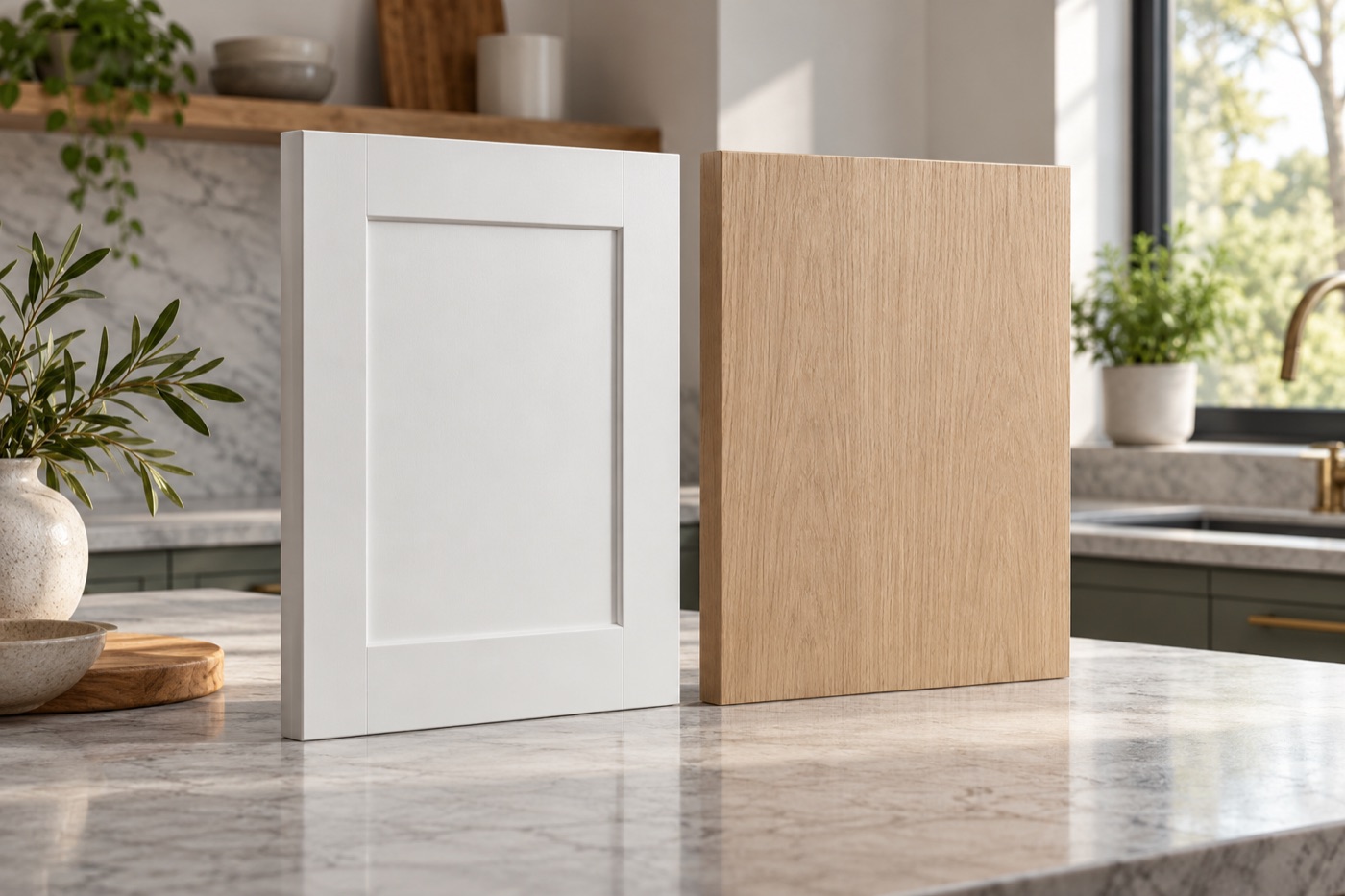
Shaker vs slab cabinets is primarily a comparison of door styles, not a verdict on cabinet quality. Shaker-style doors typically have a framed look around a recessed center; slab doors present a flat face. Evaluate either direction as part of the whole kitchen.
Shaker vs slab cabinets: choose the level of detail
Shaker doors add lines and depth that can connect with traditional or transitional features. Slab doors create a flatter, more continuous cabinet surface. Hardware, color, grain and surrounding materials can change the effect substantially, so avoid treating either label as a complete design style.
View several doors together if possible. The repetition across a full wall is different from the impression made by one sample. Also look at how the style appears on narrow drawers, tall pantry doors and island panels.
Coordinate with the countertop
If your countertop has bold movement, a quieter door and hardware combination may help it remain the focal point. If the countertop is restrained, the cabinets can carry more texture or color. The useful question is how many strong elements you want in the same view.
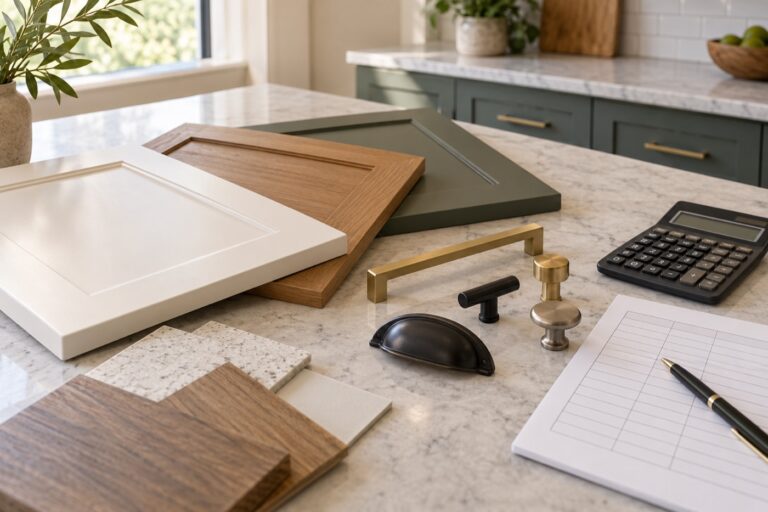
Build a sample group with the countertop, flooring and backsplash. Check undertones under the planned lighting. A door profile cannot resolve a color mismatch, and a beautiful finish cannot compensate for a layout that does not work.
Compare the actual cabinet specification
Ask about box construction, door material, finish, hinges, drawer hardware and available configurations. Do not assume that all Shaker cabinets share one construction method or that every slab door has the same core and surface treatment.
Check the manufacturer’s care instructions for the exact finish. Look at where fingers will touch the door, how hardware is positioned and whether the details are comfortable for everyday use. Maintenance depends on the product and household habits, not the style name alone.
Review the whole order
- Are matching finished panels available for exposed ends?
- How are fillers and trim handled?
- Do tall units and drawer fronts maintain the intended proportions?
- Are handles included, and who drills for them?
- Does the quoted line provide the storage configurations you need?
If a preferred style is not available in the required configuration, ask about alternatives before designing the room around it. Availability and order terms should be confirmed for the exact collection.
Use the cabinet buying guide to organize the functional decisions first. Browse TR Granite’s cabinet collection and ask which available door styles and finishes suit your project. This guide does not imply that every style discussed is stocked in every configuration.